Announcing Tweet Sheet! A New Resource for Birders
Written by Ron Coscorrosa
Announcing Tweet Sheet, a web app I just developed to help you see which birds are in your backyard (and across the world). It has absolutely nothing to do with Twitter—birds were tweeting long before social media existed. It also does not have much to do with photography, other than that people who like nature photography often (but not always!) like nature, and birds are in nature, and here we are. It all makes sense the more you think about it.
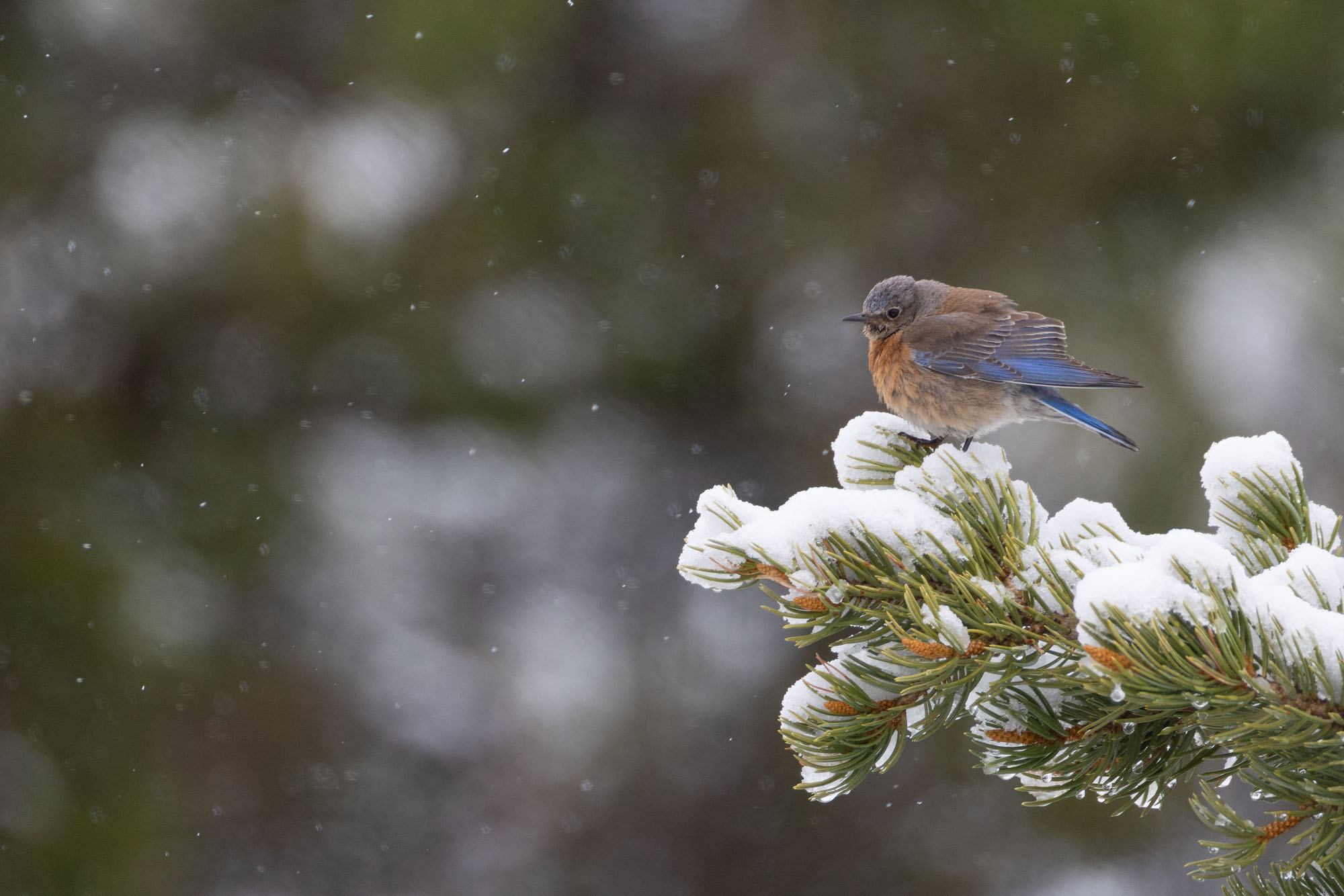
A Western Bluebird. They are uncommon at our house except this year they chose a nearby nesting box (our other box is occupied by the more common Mountain Bluebird).
In late 2024, I purchased a BirdWeather PUC, a device that sits outside in the same spot, recording and identifying birds, all day (and night) long. It uses the BirdNET machine learning model developed by Cornell University (also the home of Merlin and eBird) to detect birds, much like the Merlin app that many of you likely use while walking or hiking outside. The device publishes data from our yard to the BirdWeather network so that the recordings are available to amateur and professional bird enthusiasts alike. There is an official mobile app that you can use to see which birds were heard at your station, or other stations around the world, but importantly, for me, they also have a free public API so anyone can make use of the data recorded by these stations.
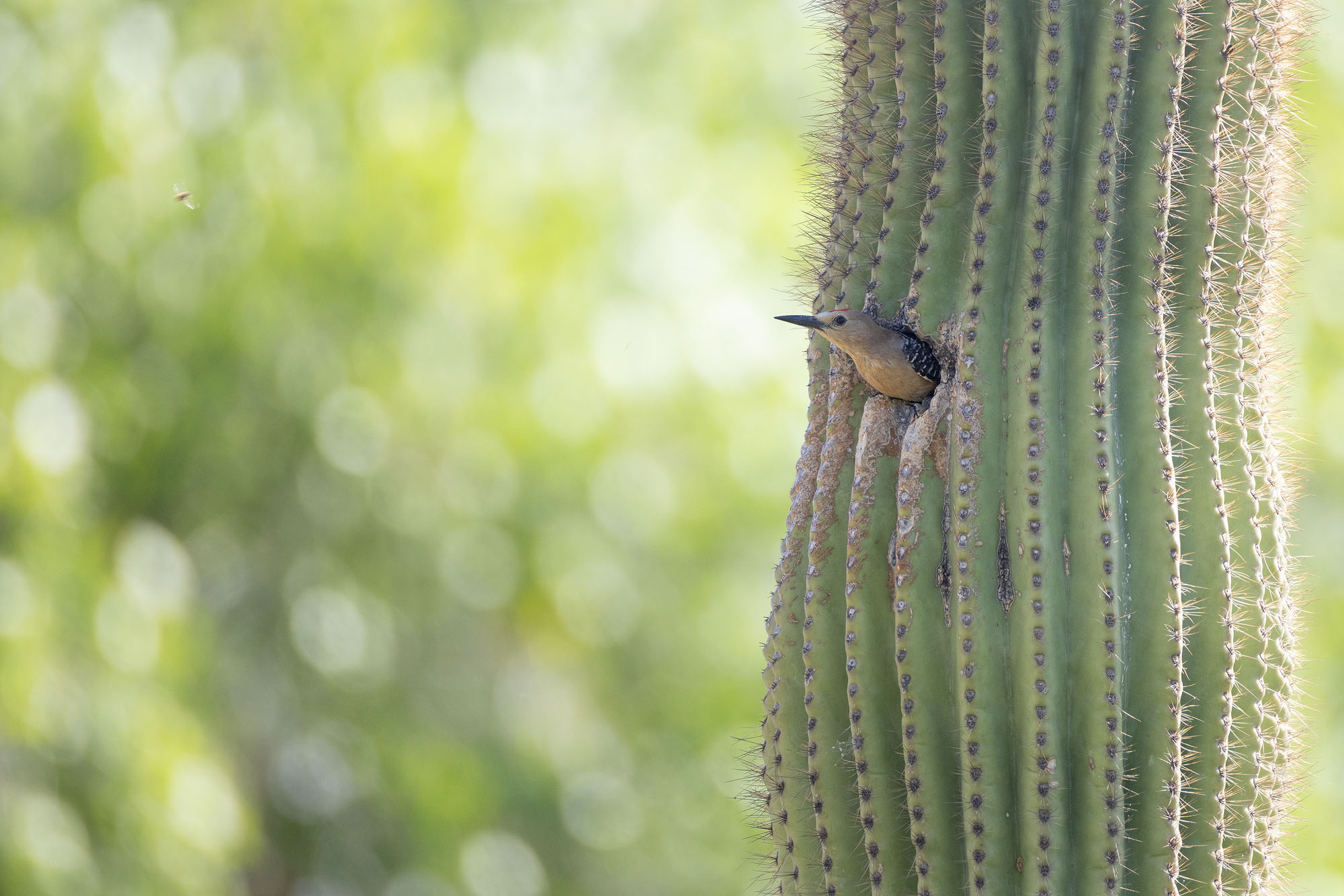
A Gila Woodpecker in a saguaro cactus in the Sonoran desert, and an insect desperate to escape its watchful gaze.
This is where Tweet Sheet comes in. As I have now had the device for over a year, I wanted to compare this year versus last year to know how the seasonal counts have changed, when species arrive and depart, what species are new this year and what species are missing this year, etc. That's where it started, yet it ended up with spectrograms and world maps...

Another visitor to our yard (much more frequent so far this year), the vocal and beautiful Green-tailed Towhee
If you have a BirdWeather station (and if you enjoy birds, you should consider getting one), you can select your specific station (as long as it is public) and use Tweet Sheet to see more complete data about the birds that come and go through your area.
You do not need to own a BirdWeather station to enjoy Tweet Sheet. You can find the closest stations to you, or you can use the station map to browse stations across the globe, or choose a random station. Currently, as one might expect, most of the 10,000 or so stations are in North America, but there are many worldwide. For example, you can browse some cool birds at these stations in New Zealand, Costa Rica, India, or Texas (which likes to consider itself a country, so included here, and to be fair, they have some really cool birds).
Anyway, that's it! I encourage bird enthusiasts to check it out (and if you can, to get your own station because it is really cool to find out that you had Common Nighthawks and Great Horned Owls active while you were asleep!).
PS: I have another free weather-related app for photographers, smallscenes.info. You can read more about how to use that resource here.
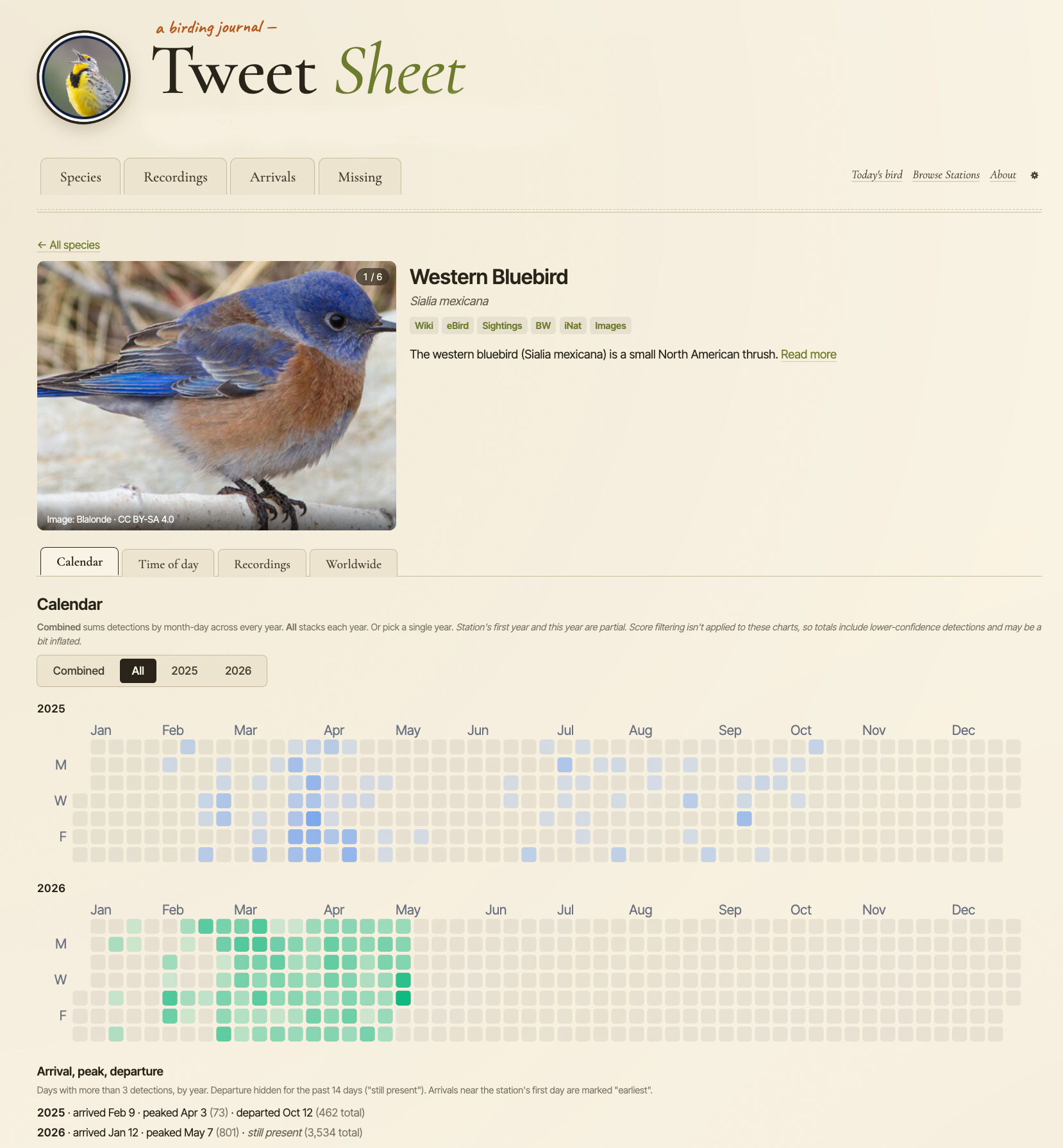
With Tweet Sheet and the BirdWeather, we can see that western bluebirds arrived almost a month earlier in 2026 compared to 2025, and they have been heard much more frequently.