Interpretations #1: There Are No Right Answers in Art
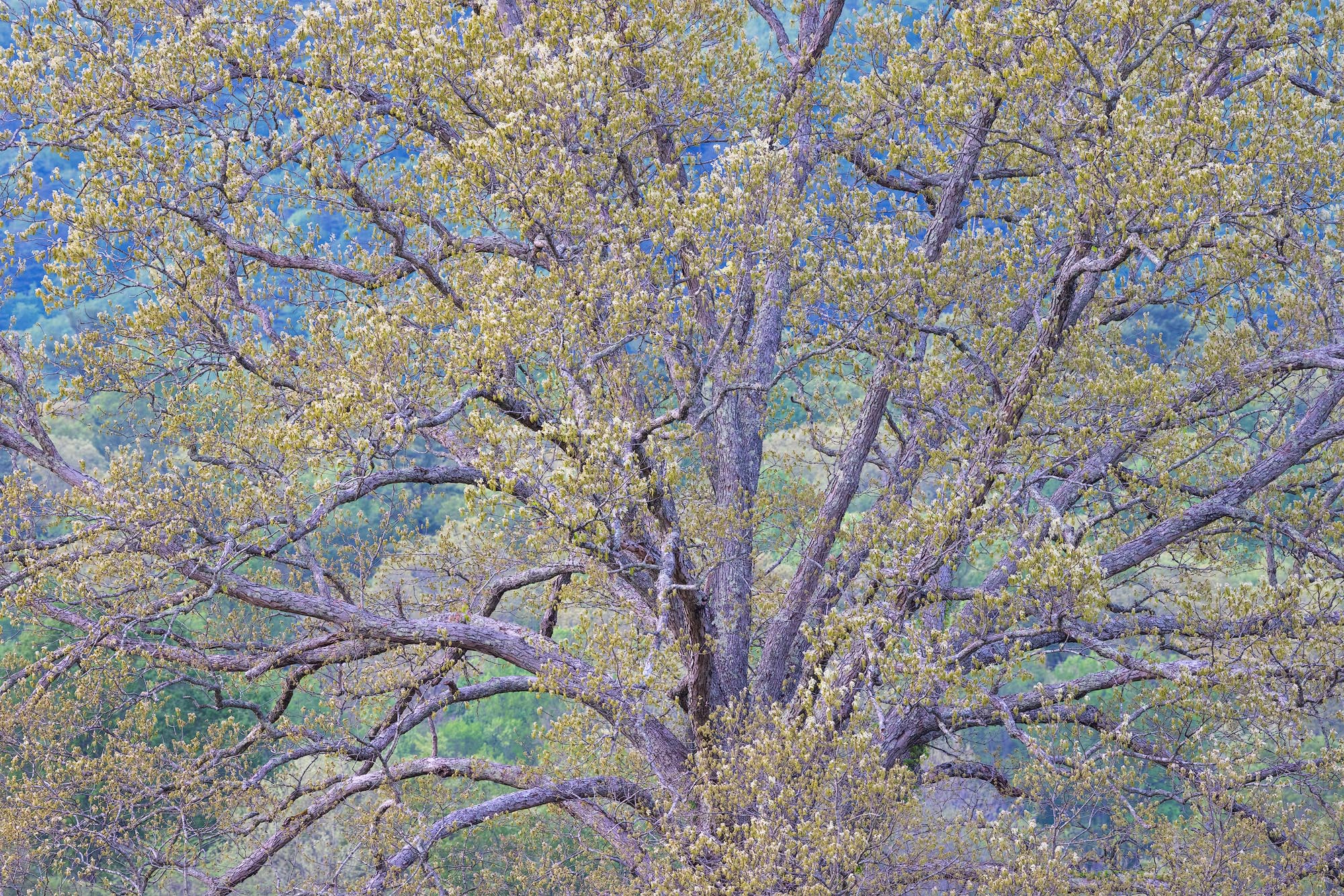
Fresh spring leaves on a grand oak in Great Smoky Mountains National Park.
Written by Sarah Marino
About 18 months ago, I joined five colleagues in a collaborative effort that would eventually become an ebook, The Nature of Place: Personal Narratives in Landscape Photography, which is now for sale over on the Circle of Light website. We are quite proud of the result, as we hoped to offer something fresh and different to the landscape photography community and, based on the feedback so far, think we accomplished that goal.
At the start of this collaboration, I considered these five women (Anna Morgan, Michele Sons, Charlotte Gibb, Claudia Welsh, and Jennifer Renwick) fellow travelers in terms of how we approach the natural world through our work. When we decided to create a collaborative ebook as our first project, the brief was simple: write a personal narrative about how you connect with the places you photograph. The six completed essays, along with the dialogues that follow, are far more diverse in approach, style, and substance than I would have predicted as we mapped out the project. In conceiving the idea for this group, my main goals were to develop closer relationships with colleagues I respect while getting out of the rut of working in isolation as a self-employed photographer. While the ebook project helped accomplish both of those goals, it also provided an unexpected framework for more deeply exploring my motivations and ideas about landscape photography, and confronting gaps and shortcomings in my thinking and practices.
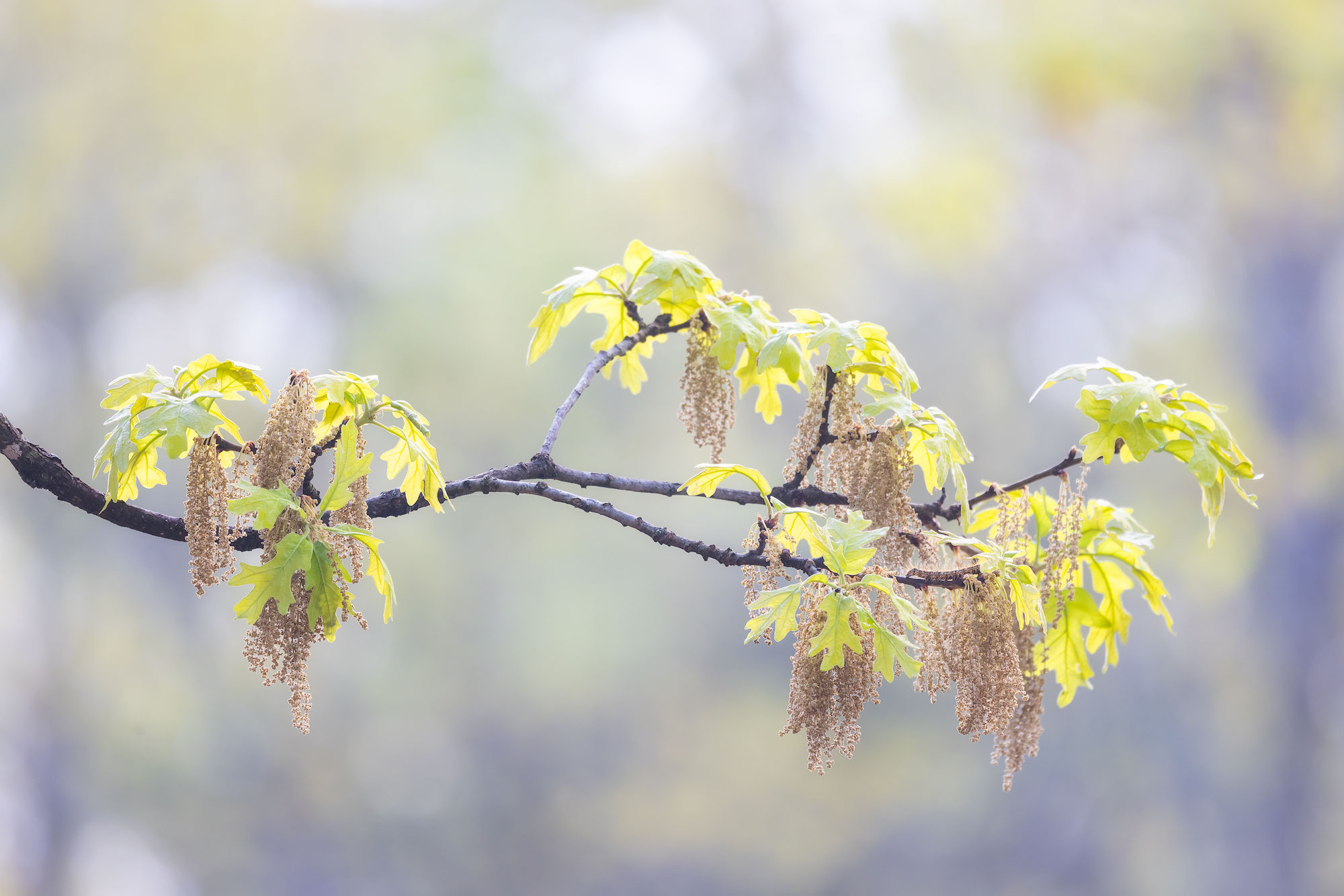
Catkins hang from an oak tree. Virgil Point Campground, Oklahoma.
I try to approach photography, both in my work and in my teaching, with humility, especially in the sense that my practices work well for me but that does not necessarily mean they will work well for others. As emphasized in the excellent book Wired to Create: Unraveling the Mysteries of the Creative Mind, even if there are some common practices, habits, and ways of thinking that support creative thinking and drive innovation, creativity is, in practice, messy and highly individualized. In this vein, the process of writing The Nature of Place furthered my belief in the importance of humility in offering guidance to others, as I could see, day - to - day among our little group, there are no "right" answers and there are many paths to creating and expressing one’s self through visual dialogue with the natural world.
This mind-expanding and intellectually challenging project coincided with increasing friction in other experiences, particularly in speaking to camera clubs, which I was doing frequently until recently. With The Nature of Place out in the world and the formative process surrounding the ebook fresh in my mind, I feel compelled to play a small role in propagating what I see as a more ideal creative space, while pushing back against the more confining and dogmatic conventions and rules that still dominate in many corners of this field. Sitting with uncertainty, being open and oriented toward evolution, knowing that the right answers for you are not necessarily the right answers for others, and being willing to challenge your beliefs and change as a result… These are some of the habits of mind I have been cultivating lately as a result of this collaborative process, and I decided it might make sense to show some of my unfinished and unrefined work in public through an occasional series of articles, starting with this introduction.
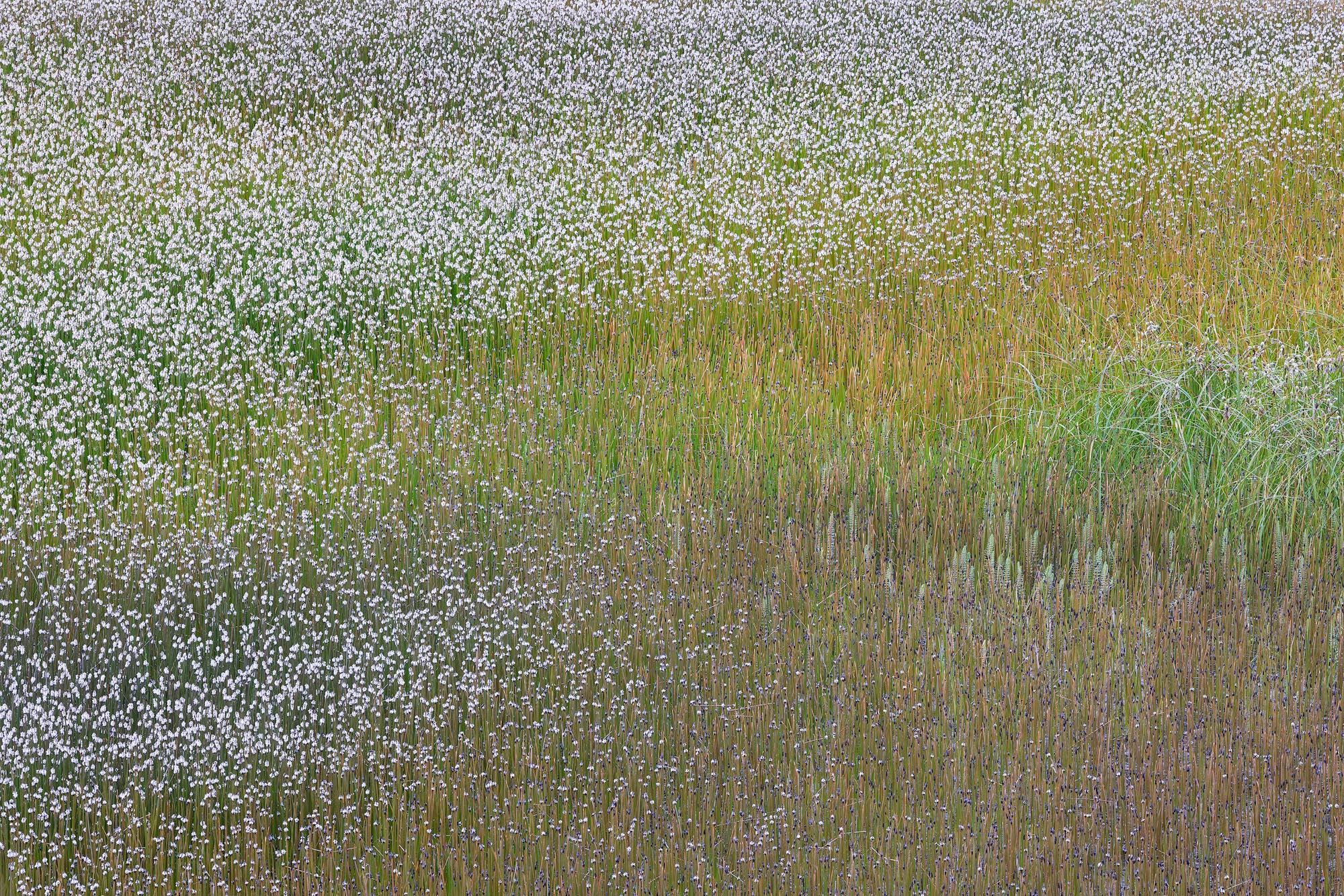
Blooming sedges, spring grasses, and horsetail plants in a wetland in Iceland.
“THE DOGMA LIVES LOUDLY WITHIN YOU”
Dogmatic: “A person or viewpoint that is stubbornly opinionated, arrogant, and asserts beliefs as absolute, unchangeable truth without evidence. It implies a rigid, close-minded refusal to consider other perspectives.”
While I have had quite a few positive and even affirming experiences when speaking to photo clubs across the world over the last few years, enough have been discouraging to the point that I have decided to stop using my time in this way. A recent (minor but instructive) example: After giving a presentation focused on the mindset habits and practices that can support creativity, someone felt compelled to let me know that one of my photos was a close-up photo and not a macro photo, as I had stated. The feedback itself did not bother me but the focus on irrelevant minutiae, with a comment that changed the tenor of the entire discussion, did bother me. By that point, similar experiences had been accumulating for years and, with so many other ideas to pursue, I decided it was time to focus my work in other places.
In 2017, one of the most memorable moments from the confirmation process for United States Supreme Court Justice Amy Coney Barrett was when California Senator Dianne Feinstein, in reference to Coney Barrett’s devout religious practices said, “The dogma lives loudly within you.” Although the stakes of what happens in camera clubs across America is of little consequence compared to a Supreme Court confirmation, and a different kind of dogma was being discussed, I think of that line often in response to the series of absurdities and discouraging experiences I have had in bringing an ever-so-slightly unconventional message to groups that seem to be obsessed with conventions and rules. Simply, the photographic dogma lives loudly within these people and I don’t want their close-minded approach to art, photography, and creative practice to rub off on me—or affect my confidence.
With regard to me mistakenly calling a close-up photo a macro photo, my reaction in the moment was “Who cares!” but I was too polite to say so. In retrospect, politeness was a mistake. I wish I had taken the opportunity to push back against this obsession with precise definition and instead encouraged the perspective that different things can matter to different people but that this particular point is irrelevant to me, especially in the context of the topic I had been invited to speak about.
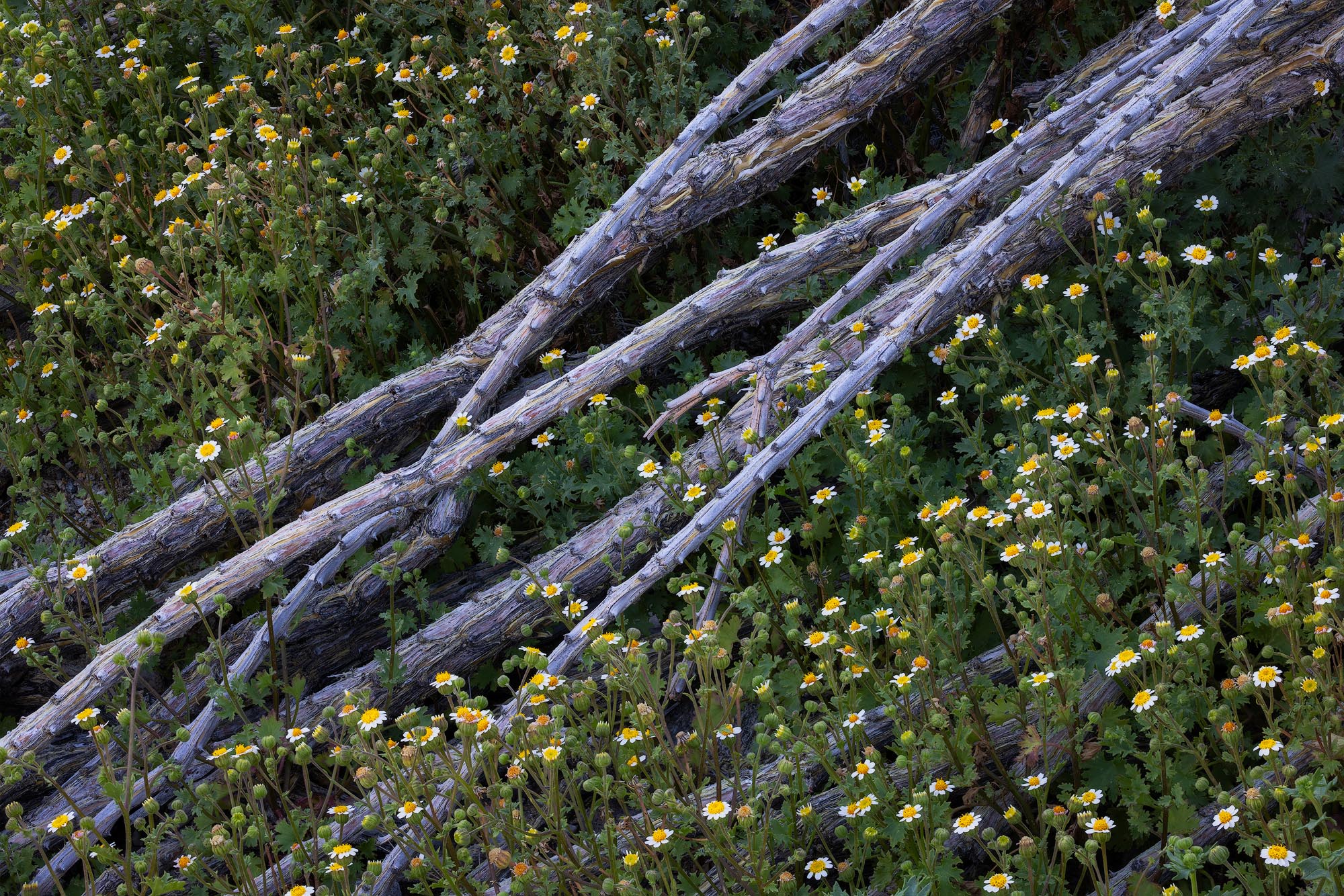
Dead ocotillo branches are surrounded by vibrant spring rock daisies. Anza-Borrego Desert State Park, California.
The list below features advice or beliefs about photography that I have directly observed being offered as universal truth over the years. Some of these ideas I agree with. I just don’t believe that photographers working outside the bounds of my ideas are somehow wrong. With intimate landscapes becoming more dominant and many photographers embracing a broader range of practices, I wondered if some of what I write about below has faded in recent years. Nope! A little internet research about landscape photography confirmed that many of these ideas are still, sadly, alive and well in top search results.
- Compositions need certain elements, like an obvious focal point or a foreground, midground, and background, to be effective.
- There is one best composition at every location. (This one sounds ridiculous but I heard it straight from the mouth of one of the most prominent photographers in this field.)
- You should never center your subject.
- This photo doesn’t conform to the “rule of thirds” (overheard during competition judging).
- Bold colors are the best colors because they grab the viewer’s attention.
- You need colorful clouds for a good grand landscape photo.
- If you have clear skies, there is nothing to photograph (the Death Valley Lament, seen online every winter).
- A photo needs to be sharp across the frame.
- There is good light and bad light, and you are wasting your time to photograph during bad light.
- The Golden Hour is the best time to photograph.
- You need certain gear if you are serious about photography.
- A wide angle or ultra-wide angle lens is the most important lens there is for a landscape photographer.
- You must use a tripod for precision.
- You shouldn’t use a tripod to stay adaptable.
- Any photographer who uses Photoshop in a creative way, especially if they do not disclose it, is dishonest.
- Real photographers do not use presets.
- Real photographers always use RAW files.
- Intimate landscapes are more expressive than grand landscapes.
- You have to get peak conditions to get the good photos (see: fall colors).
- Nature photography shouldn’t show any evidence of human presence.
- Favor or disfavor about certain locations and their photographic potential: Iceland is over-photographed and it is no longer possible to make fresh work there, or photographers need travel to places like Iceland, Greenland, Patagonia, and Japan (the new hotness) to make interesting work because locations in the US are tapped out.
- A certain aspect ratio is the best.
- A photograph is only finished after it is printed.
- You shouldn't be teaching photography unless you have a background in art history.
There is so much emphasis on strict definitions, rules, conventions, and dogmatic views like these that it is understandable whenever someone comes to think there is, in fact, a right way of approaching photography and thus misses the chance to find a more personal way of working. I am starting this series to push back on this dogmatic thinking and offer a more open-minded and less certain way to consider your photographic practices. And, if photographic dogma currently lives loudly within you, I'll gently offer the encouragement to consider some of the negative implications of such rigid thinking, both on your work and on the work of others if you are in a position of authority, leadership, or influence in this field.

Early leaves on an oak tree in Great Smoky Mountains National Park.
THERE ARE NO UNIVERSAL TRUTHS, BEST APPROACHES, OR RIGHT ANSWERS
Too many people in our field offer their way as the way, either because they are hoping to capitalize on their “secrets” or because they actually believe that they are doing things in the best or correct way. There are no universal or objective truths in photography or art. Instead, we have the opportunity to interpret these ideas for ourselves, possibly through learning from others but mostly through introspection and interrogating our reasons for photographing in the first place. You get to decide what any term or concept means to you, how important it is to your work, and how you will apply it, if at all, and I get to decide what all those things mean for me, too. And, if you feel like you are not meeting someone else’s standards related to your photography, and are feeling discouraged as a result, it could be time to turn inward to interpret what the idea means to you and then consider your practices in relation to your interpretations.
To make things more complicated, some words that are frequently tossed around among photographers have lost much of their meaning because they are used in such divergent ways. This can leave anyone working through these questions on their own without a clear place to start. While doing some reading for this post, I came across an article featuring a photo of the famous red cabins in Lofoten, Norway. In the write-up, the photographer described the photo as among his most expressive work because, while many others have photographed the same scene in the past, he experienced unique conditions. Conversely, others in our field describe expressive photography as using their work to explore and communicate profound emotional experiences.

Visitors to Death Valley might be familiar with the Devil's Cornfield location. The plants there are not corn but are arrowweed, a member of the Asteraceae family. Up close, the plants have delicate, fuzzy leaves, along with tiny flowers during blooming season.
With such a broad range of usage for this single term, we as individuals seeking answers about what “personal expression” means in our own work have a few potential paths to consider. We can look to someone we respect and adopt their practices as our own, or we can embark on a path of discernment to figure out what these ideas mean for ourselves. While the former can work for a while, eventually, I believe, we each need to set out on our own if we hope to create personally meaningful work that reflects our individuality and unique perspective on the world.
To be transparent, some writing on the topics I’m planning to discuss in this series, including what it means to create “expressive photography,” has brought me towards a feeling of failure because, when considering the standards of others, I know I will never reach their ideal of becoming a true artist capable of communicating profound emotions and depth through my work. With time, I have come to realize that I do not actually want that for myself. Instead, I am looking for much more lightness and joy in my work, and that is an equally valid form of self-expression, even if it may be more superficial. I want my work to have substance and I want to take it seriously but I am simply not interested in investigating the deepest mysteries of human existence with my camera or seeking to infuse complex metaphors into my photos or my process, mostly because these approaches do not reflect my experiences with or connections to the natural world. Yet, I still believe I am actively creating expressive photographs.
We do not have to fit into other people’s definitions or concepts of what is right or best or most authentic or truly meaningful. Instead, we can, and should, craft our own ideas and let them guide us as we evolve along the messy path that is living a creative life. Others, especially thoughtful and insightful people, can guide us in asking potentially profound, transformative, or helpful questions but only we can find the answers for ourselves. Introspection, and getting to know ourselves more deeply and honestly, is the path, as challenging and complex as it may be. If creating personal work is important to you, you have to seek out and find answers for yourself, and then find the confidence, if you do not have it already, to believe in your ability to evolve in the direction that is right for you.
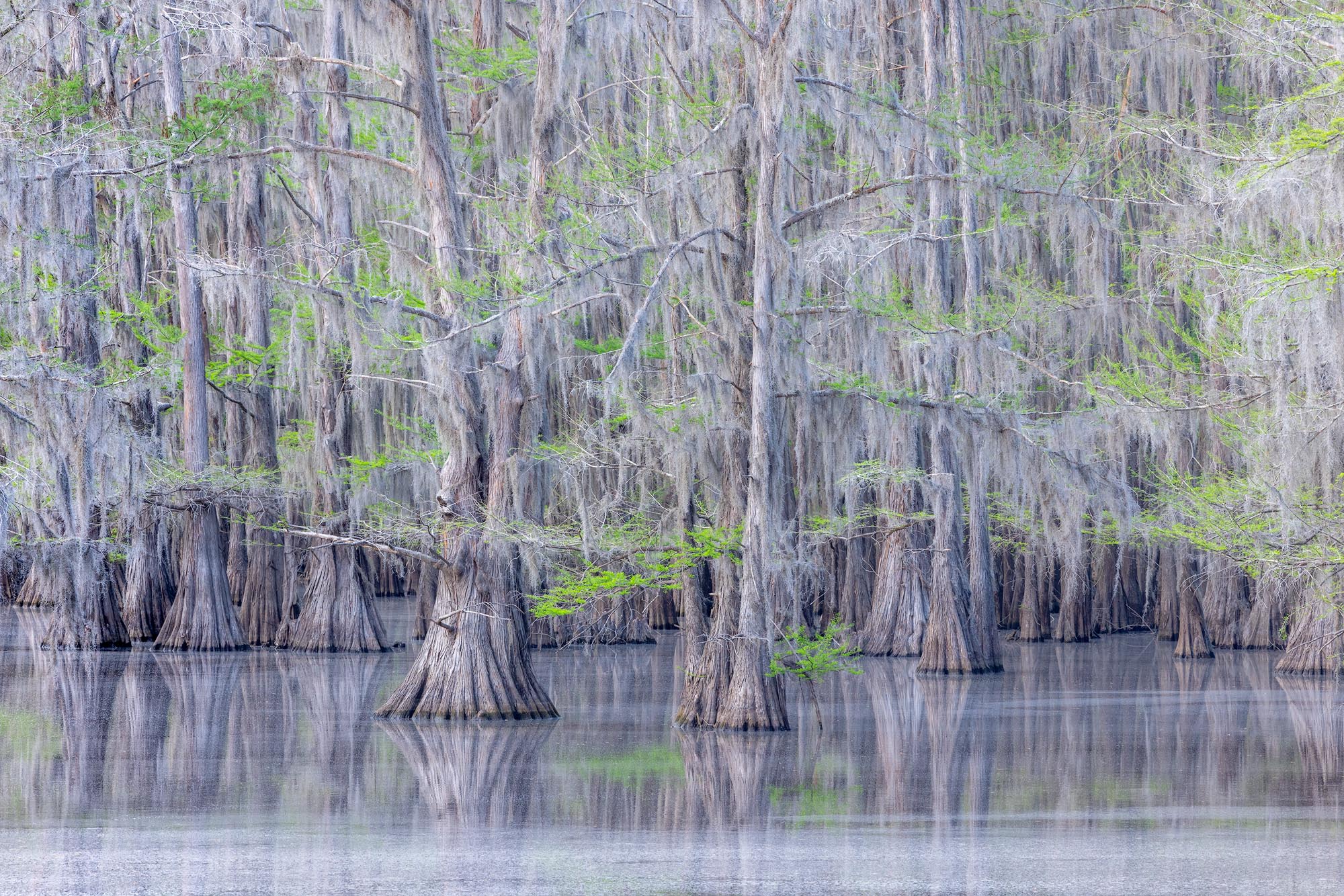
Fresh spring green needles on bald cypress trees in Texas.
INTERPRETATION IN ART AND PHOTOGRAPHY
I selected “interpretations” as the framing for this series because it is a word used in so many different ways in art and photography. I think it makes sense to extend its usage to how we, as individuals, think about our creative practices.
The term “interpretation” is commonly used in two ways within the photographic arts. First, interpretation can be used in the context of how a viewer assesses and reacts to a specific photo or body of work. This blog post offers an accessible, concise review of the principles of interpretation, including observation, considering context, assessing your emotional response, looking for symbolism, and contemplating the artist’s intent in conjunction with your personal perspective on the work—all while being open to the idea that different viewers will each have a divergent, personal interpretation of the work under consideration, and each of these interpretations is valid. This last point is the thread that I’d like to consider through this full series—others come to photography with varying motivations, goals, and aspirations (or lack thereof) and will thus be walking a different (and equally valid) path from our own.

A wild garden of fresh green plants and ferns in Great Smoky Mountains National Park.
Second, nature photographers talk about how we individually interpret a landscape. In this context, interpretation often means that we take in the scene in front of us, tune into what appeals most to us both visually and emotionally, and then use that response to craft a photograph. If two creatively-minded photographers were to create a small portfolio of work from the same place at the same time, they would have two different interpretations (but with some possible overlap) of the place based on their aesthetic sensibilities, compositional habits, and moments of emotional resonance. With this usage, interpretation has less concern for the viewer’s reaction to the work and instead focuses on how we, as the photographer, interpret the world in front of us as part of creating individual photographs or bodies of work.
In returning to the example of the Lofoten cabins above, one way to interpret a scene is through the familiar, classic view. In my own work, I think about this approach as creating a photocopy—all I have to do is show up and create my version of a well-established motif. Because self-expression is something I am striving toward, I try to minimize this approach but still do it, and enjoy it, from time to time. We can think of this approach as a cover band working to closely imitate the style and presentation of a classic song, without infusing much of themselves into the performance. Some photographers find significant fulfillment in this space and although it represents a different approach compared to my own, I consider it an equally valid way to pursue landscape photography, as long as the photographer is not overtly taking credit for the compositional ideas and location innovations pioneered by others before them.
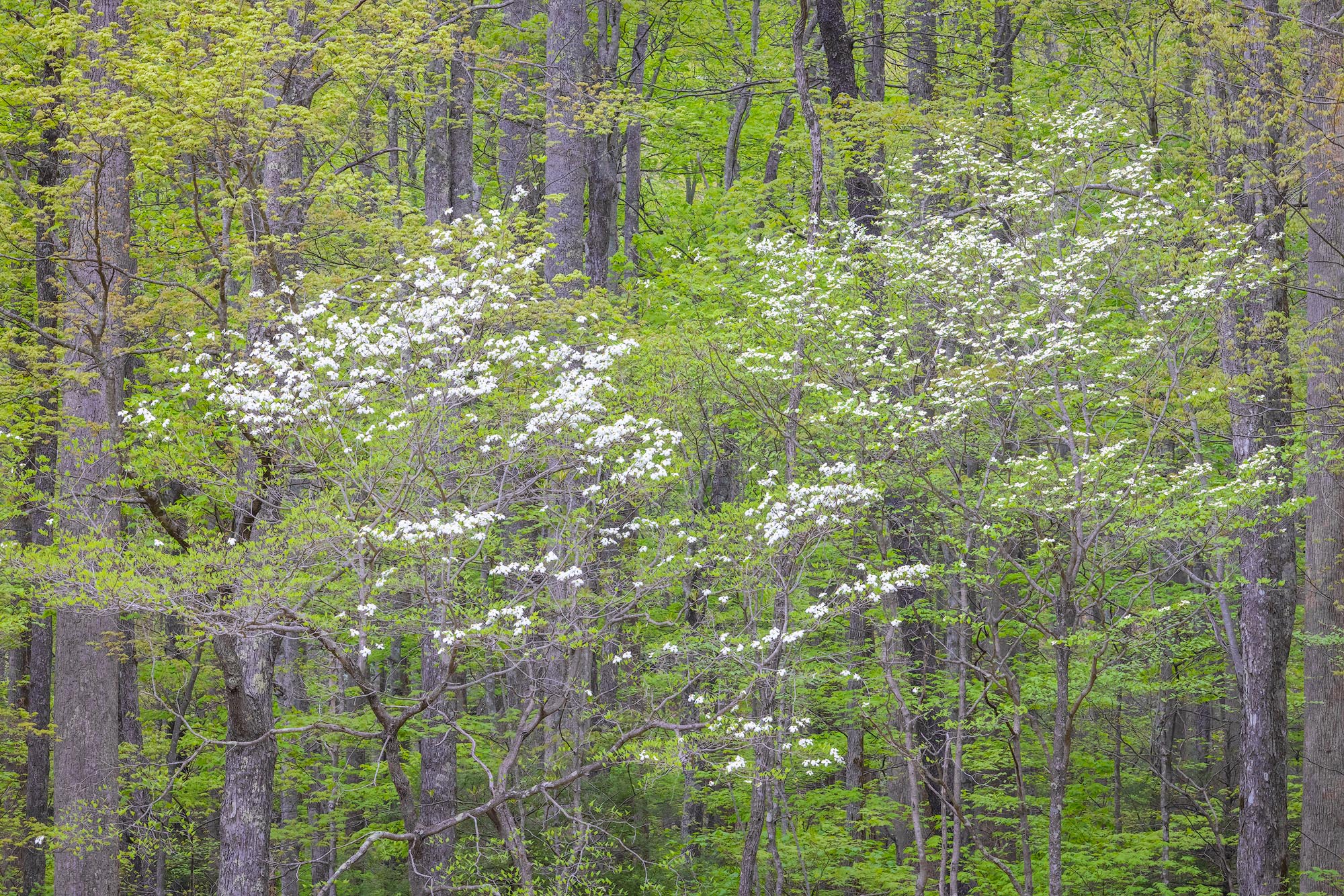
White dogwood blooms in Great Smoky Mountains National Park.
Another form of interpretation is taking an established idea and working to make it your own. One of our favorite musicians is Gregory Alan Isakov and I’ll use one of his songs, "Salt and the Sea," as an example of a complex, messy, and more fluid approach to interpretation. Isakov released a song titled "Salt and the Sea" as part of his 2007 album, The Sea, The Gambler (note: our least favorite song on that album). In 2019, The Lumineers, long-time friends with Isakov, released a completely different song with the same name, "Salt and the Sea," on their album III. In 2021, Isakov released his own interpretation of the "Salt and the Sea" song from the Lumineers, completing, for now, a string of creative mixing. Returning to Norway, most photos of the famous Lofoten cabins are very similar except for tweaks to the composition and variations due to weather conditions. The two recent "Salt and the Sea" songs are something different: the two interpretations of the same song demonstrate individual expressive styles and different flavors of emotional resonance even though the lyrics are the same and the melody is similar.
In practice, we can approach interpreting the landscape with someone else’s ideas to fully guide us, we can strive to take a more personal approach, even if echoes of other influences clearly come through in the final works, or we can strive toward fresh, surprising, novel, or unique perspectives—or mix all three depending on the context. Since we all have different reasons for photographing the natural world, there is validity in each of these approaches, and we are free to evolve along diverging paths as our interests and goals shift with experience. Just as we can take different approaches to interpreting the artwork of others as viewers or the landscape in front of us as photographers, we can, and should feel the freedom to, individually interpret the definitions and concepts that serve as the foundations of our field.
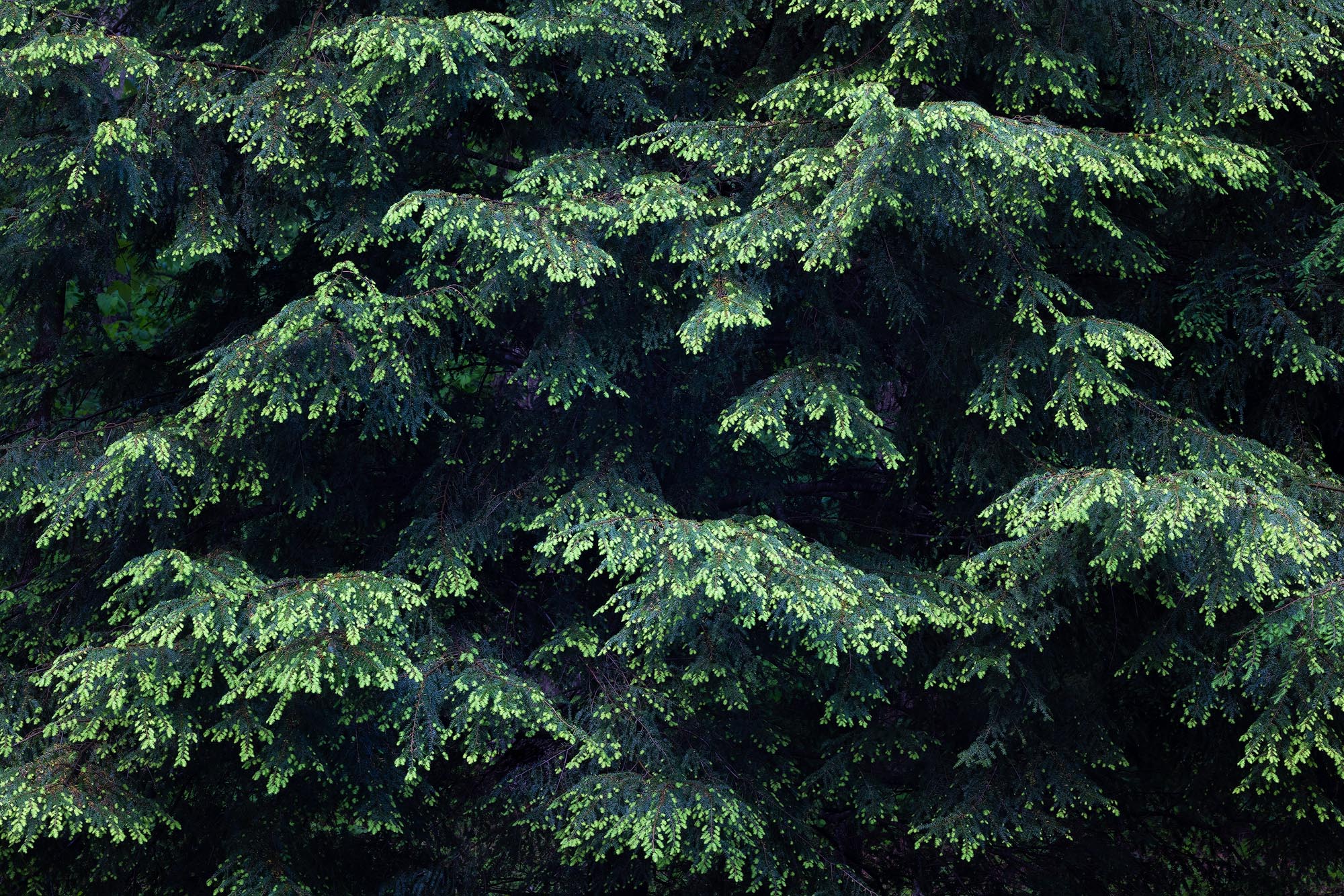
Fresh spring growth on a hemlock tree in Great Smoky Mountains National Park.
THE INTERPRETATIONS SERIES
With this series, I plan to explore the words and concepts nature photographers use most, providing some context, explaining what they mean to me, and offering some light guidance on how you might interpret them within your own practice, hopefully with lightness and not taking things too seriously. Next up: the role of place in how we work.
Over the last few years, I have been happy to see more nature photographers pushing back against dogma in favor of less certainty, more complexity, non-conformity, individuality, and open-mindedness, and I hope to support that trend in a small way with this series. If there is a topic you would like to see me cover, please reach out with your thoughts and I’ll add your notes to my notes.
As I tell workshop students, with mixed results, my job is to help surface some of the right questions but it is up to them to find the answers. I offer this series in that spirit.