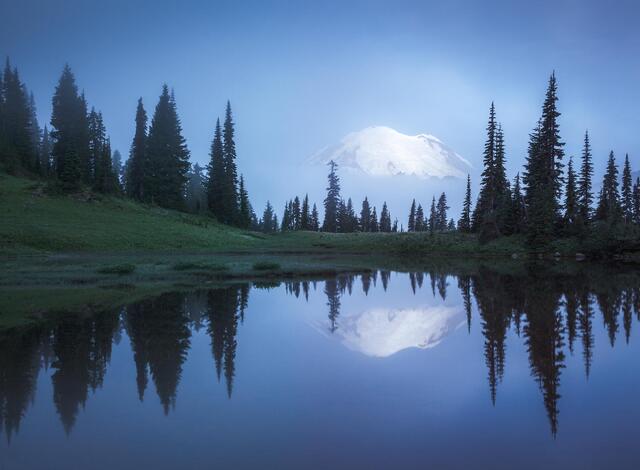
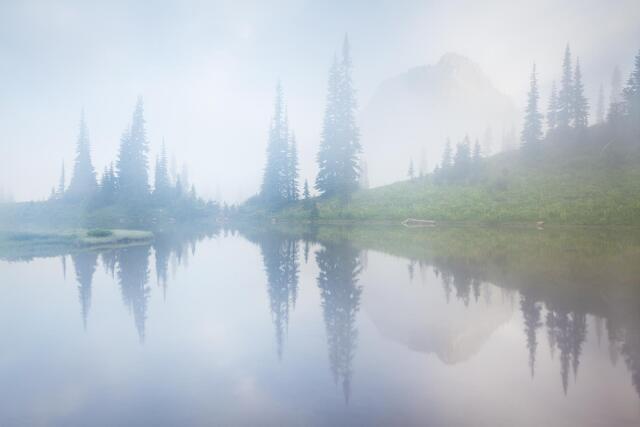
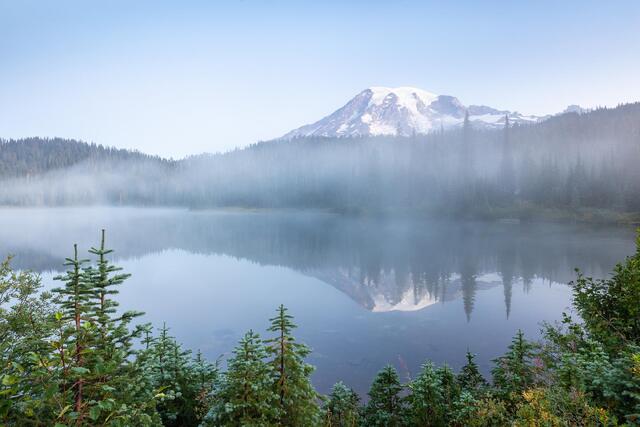
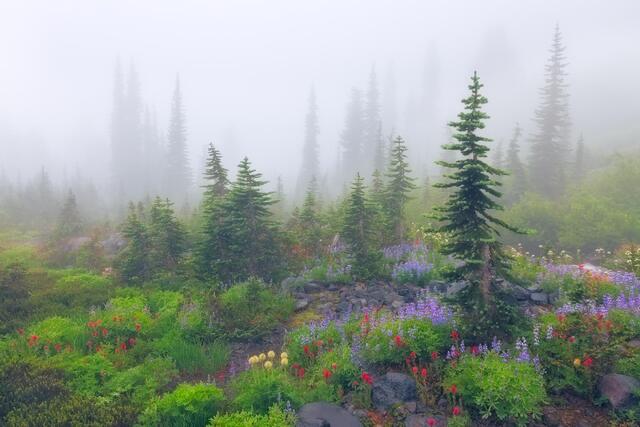
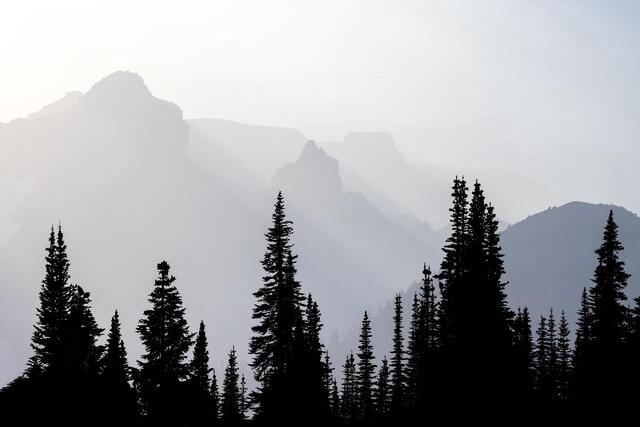
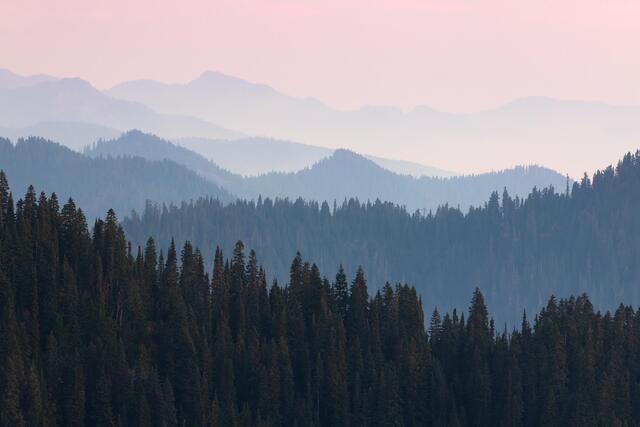
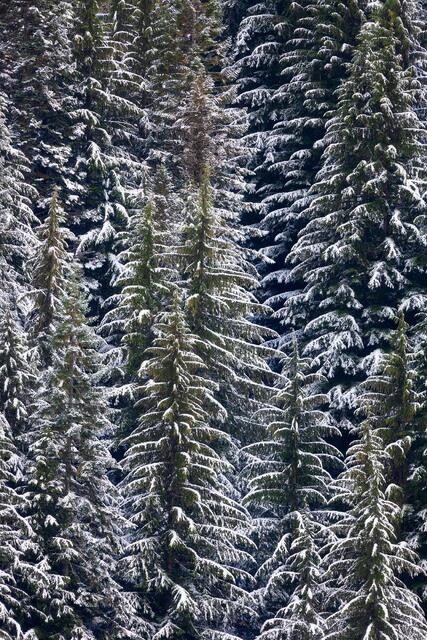
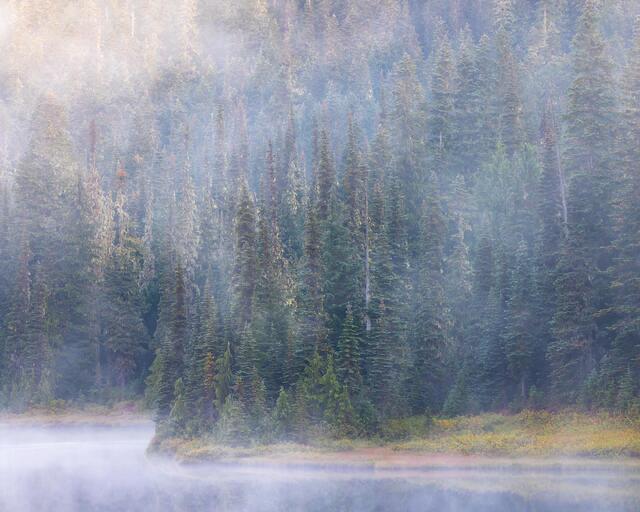
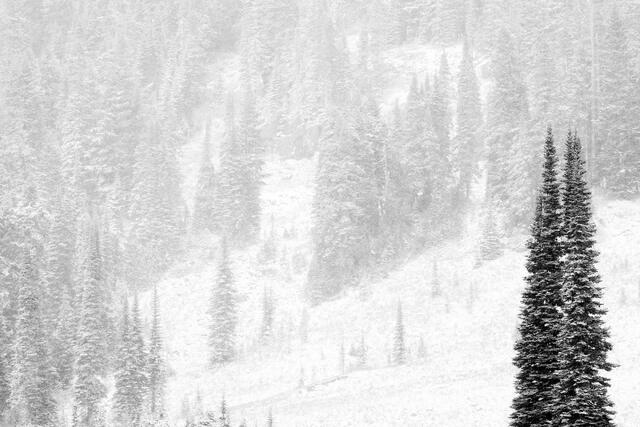
Mount Rainier is a 14,410-foot tall active volcano that quickly rises above the surrounding landscape. This dramatic change in elevation provides easy access to a range of diverse ecosystems. At lower elevations, thick forests are dotted with deciduous trees including alders and maples, with towering Douglas fir, western red cedar, and western hemlock creating the canopy high above. Mushrooms, lichen, mosses, and lush ground cover plants add to the botanical diversity. In between the glaciated alpine peak and these lower elevation forests, expansive fields of wildflowers expand across the subalpine landscape during the summer.
As summer fades, this ecosystem becomes one of our favorite places for fall photography. Autumn is a subtle affair in one sense: the mountain ash and huckleberry hug the ground, at least in comparison to the taller coniferous trees that dominate the subalpine forests. In another sense, these bushes are among the boldest characters on the mountain with their flamboyant purples, oranges, and reds often appearing as a mixed spectrum of color on individual leaves, on the mountain ash as bright clumps of berries, and as splashes of color painted across the landscape.