Flowing and Resisting

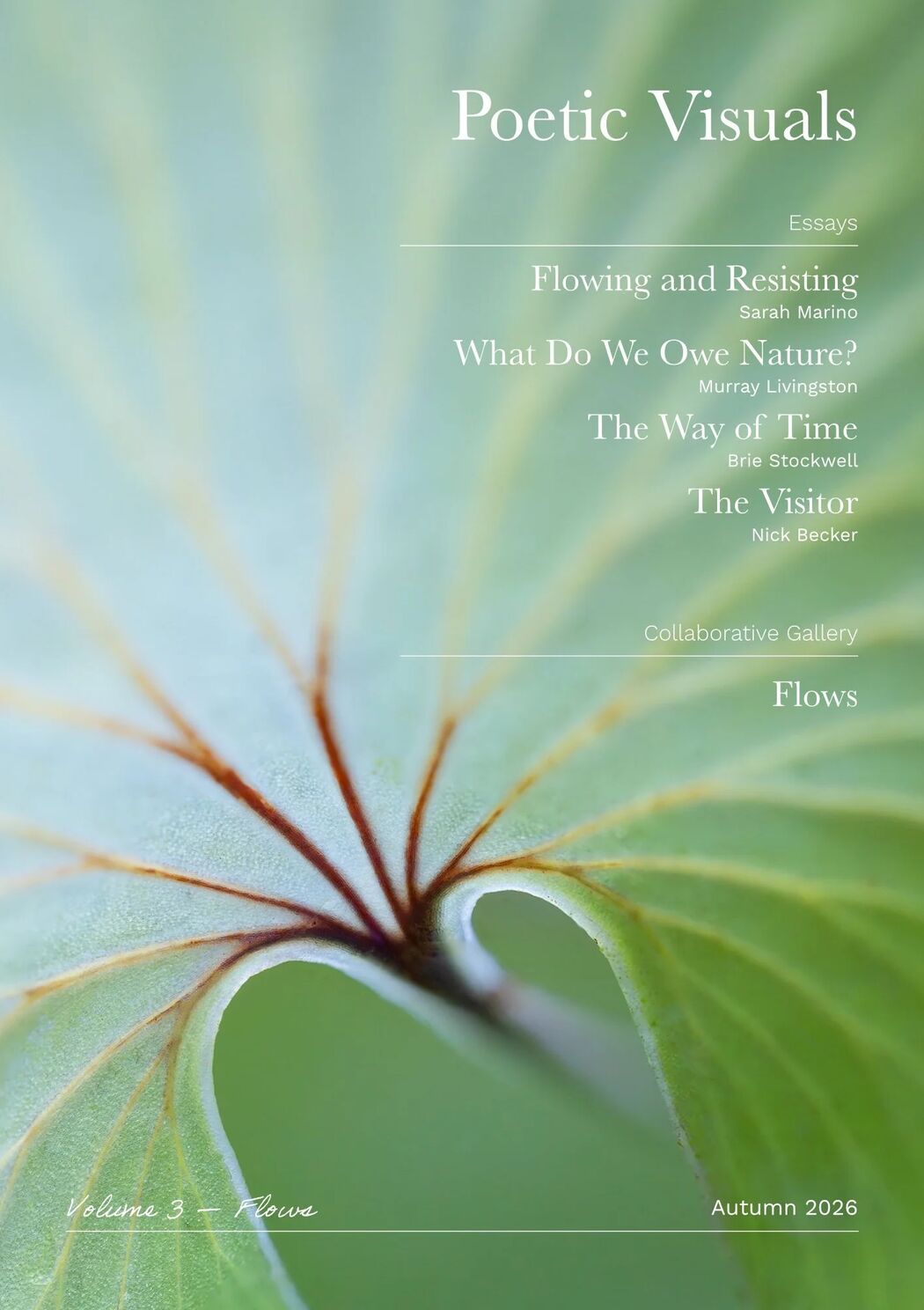
A translucent leaf of a kidney fern (Hymenophyllum nephrophyllum) growing in Westland Tai Poutini National Park on the South Island of New Zealand.
Written by Sarah Marino (all human, no AI)
I am happy to share that I have an essay in Volume 3 of Poetic Visuals, a photography journal created by Nick Becker and Murray Livingston that explores the intersection of language, poetics, and nature photography. I write about flowing and resisting in the field while exploring identity and expectations with three plants as my guide—the American bistort, the New Zealand tree fern, and the gravel ghost wildflower.
You can read the first few paragraphs of my essay below and then can click over to Murray's website to download the PDF (free to download, no sign-up required). Inside, you will find three additional essays from Nick, Murray, and Brie Stockwell, along with a collaborative photo gallery. The theme for this issue is "flow" and I love how we each addressed this concept in such different ways. I'd recommend reading all four essays if you have the time. I really love the concept behind this collaborative project and look forward to each new issue so I was excited when they asked me to contribute. Sincere thanks to Nick and Murray for including my contribution.
AMERICAN BISTORT - IDENTITY
One of the first plants I remember noticing, while wandering around Colorado’s high alpine backcountry years ago, was the American bistort (Bistorta bistortoides). This bistort is a native summer wildflower here in Colorado, and I first noticed these flowers because they were constantly blowing in the wind, even when the other flowers around them were still. For this reason, and this reason alone, the bistort became the object of my annoyance.
Like most nature photographers, I am drawn to dynamic weather, when light and landscape interact in invigorating ways. Wind often comes with dynamic weather and in some landscapes, like sand dunes, the wind can intensify the experience and enhance the photographic result. In most other situations, relentless wind can wear a person down, and create technical issues that test the creative mindset for nature photographers because too many things are moving around when we want them to be still.
When I am in the wind, I often feel restless and battered, unable to direct my attention and focus beyond the wind itself. I have difficulty with cold weather and my body often suffers for nature photography, and the wind makes it worse—sore, reddened skin, deeply chapped lips, painful hands, and eyes dripping with tears because they are so dry. In warmer climates, the wind is known for driving some people to mental instability. A common refrain among desert dwellers and visitors alike: “It is not the blistering heat, intense sun, or drought that makes a person go insane, it is the wind.” Over time, I have wrapped up all of my animosity toward the wind and projected it onto this little white mountain flower, the bistort. My husband and I, both nature photographers, often see a plant swaying in the wind in a new-to-us place and reference it in relation to the bistort, turning the bistort into our icon of derision toward the wind.
The bistort’s inch-long oblong flowerhead, brimming with a fluff of tiny white petals, sits atop a lanky stem. With only this thin thread to hold it up, it is no wonder that these flowers are constantly dancing in the wind, drifting above the other wildflowers that have evolved to be wise enough to grow closer to the ground for a bit of protection from the harsh elements at high altitudes. In some meadows, the bistort can grow so thick that it looks like drifts of summer snow during rare moments of calm. The slightest breeze brings these drifts to life, animating them to move in fluttering coordination, turning the summer snow into a rhythmic wave of white cotton.
Continued in the full PDF...
You can download Poetic Visuals - Volume 3 here.